Free & Open Source Cybersecurity Tools (2026)
Free and open source cybersecurity tools cover far more ground than most buyers expect, from vulnerability scanners and SIEM to OSINT, encryption, and full endpoint protection. For lean teams and proof-of-concept work they are often the fastest way to close a gap without a procurement cycle. The tradeoff is usually support, scale, and the time your team spends operating them, so the right move is matching the tool to how much hands-on tuning you can realistically afford.
Browse 2,407 cybersecurity solutions, with 0 security professionals searching monthly
Quick Reference
- What is the best free antivirus in 2026?
- For Windows, Microsoft Defender is the default and consistently scores in the top tier of independent tests. Bitdefender Free Antivirus is the cleanest third-party alternative. ClamAV remains the standard for Linux servers and email gateways.
- What is the difference between free and open source security tools?
- Free tools cost nothing to use but may be closed source (Microsoft Defender, vendor free tiers). Open source tools publish their source code under licenses like Apache, MIT, or GPL — you can audit, modify, and self-host. Open source needs more operational effort but is more transparent and customizable.
- Which free SIEM is production-ready?
- Wazuh is the most capable free open source SIEM, with HIDS, file integrity monitoring, vulnerability detection, and compliance dashboards built in. ELK Stack with security tuning and OSSEC are mature alternatives.
- Are open source security tools as good as commercial ones?
- For specific use cases, yes. Wazuh rivals Splunk for detection, OpenVAS rivals Nessus for scanning, OWASP ZAP rivals Burp Suite Pro for testing, and Bitwarden matches 1Password for most teams. The trade-off is operational overhead and the absence of vendor support SLAs.
Acronym Glossary
- SIEM
- Security Information and Event Management — centralized log collection, correlation, and alerting platform.
- HIDS
- Host Intrusion Detection System — agent that monitors a single endpoint for suspicious activity, file changes, and policy violations.
- SAST
- Static Application Security Testing — scans source code for vulnerabilities without executing it.
FEATURED

OPEN SOURCE

A toolset for collecting and processing netflow/ipfix and sflow data from netflow/sflow compatible devices.

Maltiverse automates Threat Intelligence for small and medium-sized SecOps teams, providing an effective and affordable service.
NBD (Network Block Device) is a network protocol implementation that allows clients to access remote block devices over a network as if they were local storage.

OpenPhish provides real-time phishing trends, detecting new phishing URLs and targeting various brands.
A library for accessing and parsing OLE 2 Compound File (OLECF) format files, including Microsoft Office documents and thumbs.db files.
Maldatabase is a threat intelligence platform providing malware datasets and threat intelligence feeds for malware data science and threat intelligence.

A nonprofit security organization that collects and shares threat data to make the Internet more secure.

Search engine for Windows executable files and hashes, providing insights into file prevalence, behavior, and security information.
A collection of Python scripts for password spraying attacks against Lync/S4B & OWA, featuring Atomizer, Vaporizer, Aerosol, and Spindrift tools.
An open source format for storing digital evidence and data, with a C/C++ library for creating, reading, and manipulating AFF4 images.
A library to access FileVault Drive Encryption (FVDE) encrypted volumes on Mac OS X systems.

TestDisk is a free data recovery software that can recover lost partitions and undelete files from various file systems.

A digital archive of the internet, allowing users to capture and browse archived web pages.

FullHunt is a next-generation attack surface security platform that enables companies to discover, monitor, and secure their external attack surfaces.
JIMI is a flow-based orchestration automation platform that combines low-code and no-code capabilities for multi-team collaboration across IT, security, and development operations.

A project sharing malicious URLs used for malware distribution to help protect networks.

All-in-one vulnerability intelligence platform for prioritizing remediation efforts and driving security strategies.

Catalyst is a SOAR system that automates alert handling and incident response processes, adapting to your workflows and being open source.

Search engine for open-source Git repositories with advanced features like case sensitivity and regular expressions.
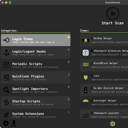
A free, open-source tool that uncovers persistently installed software on macOS, helping to generically reveal malware.

An all-in-one email outreach platform for finding and connecting with professionals, with features for lead discovery, email verification, and cold email campaigns.

A search engine for open Amazon S3 buckets and their contents, allowing users to search for files using keywords, filename extensions, and full path.

ClamAV is an open-source antivirus engine that detects trojans, viruses, malware, and other malicious threats.

Parrot Security OS is a comprehensive, secure, and customizable operating system for cybersecurity professionals, offering over 600+ tools and utilities for red and blue team operations.










